About Ryan Karingi's work:
Photo Theme:
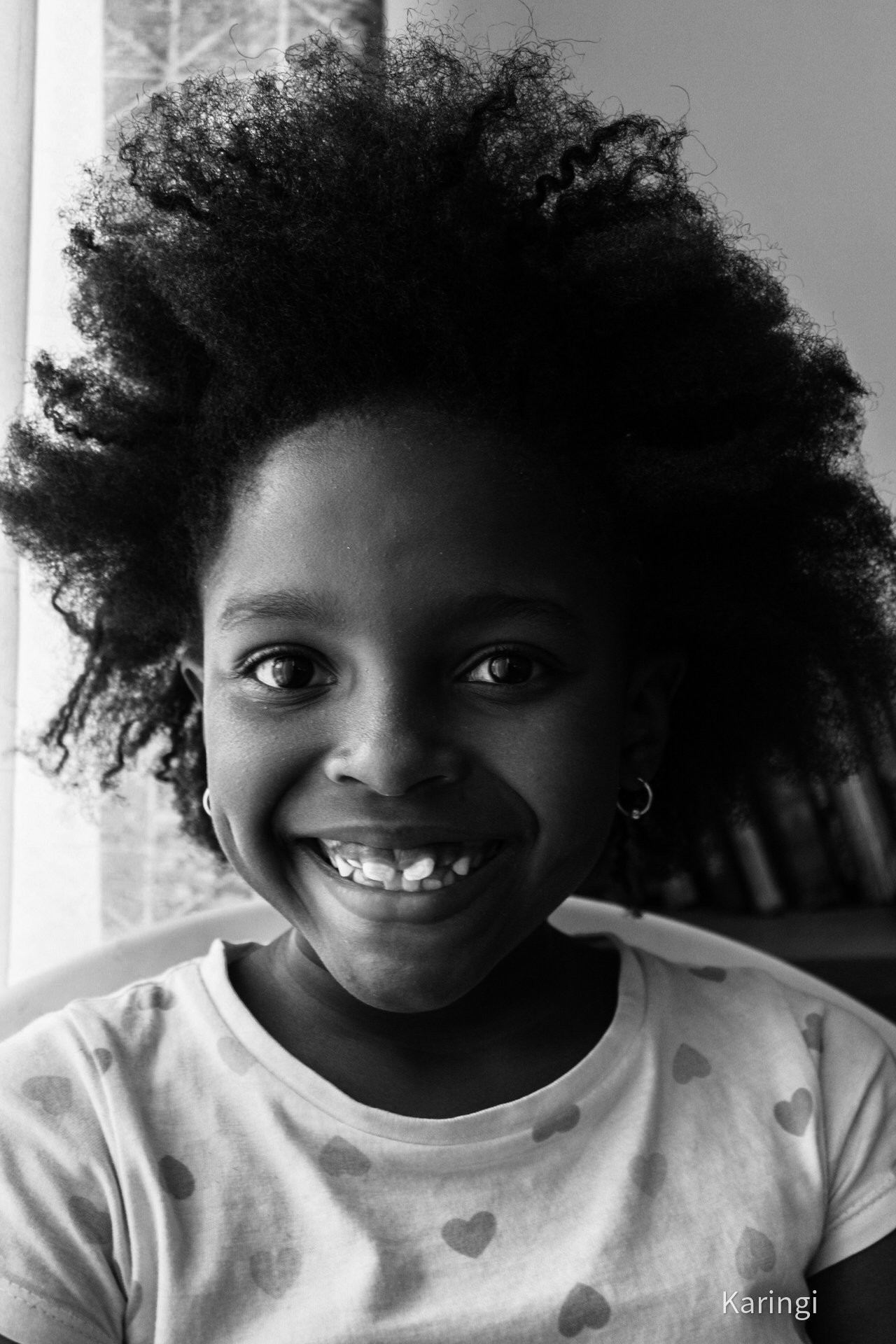
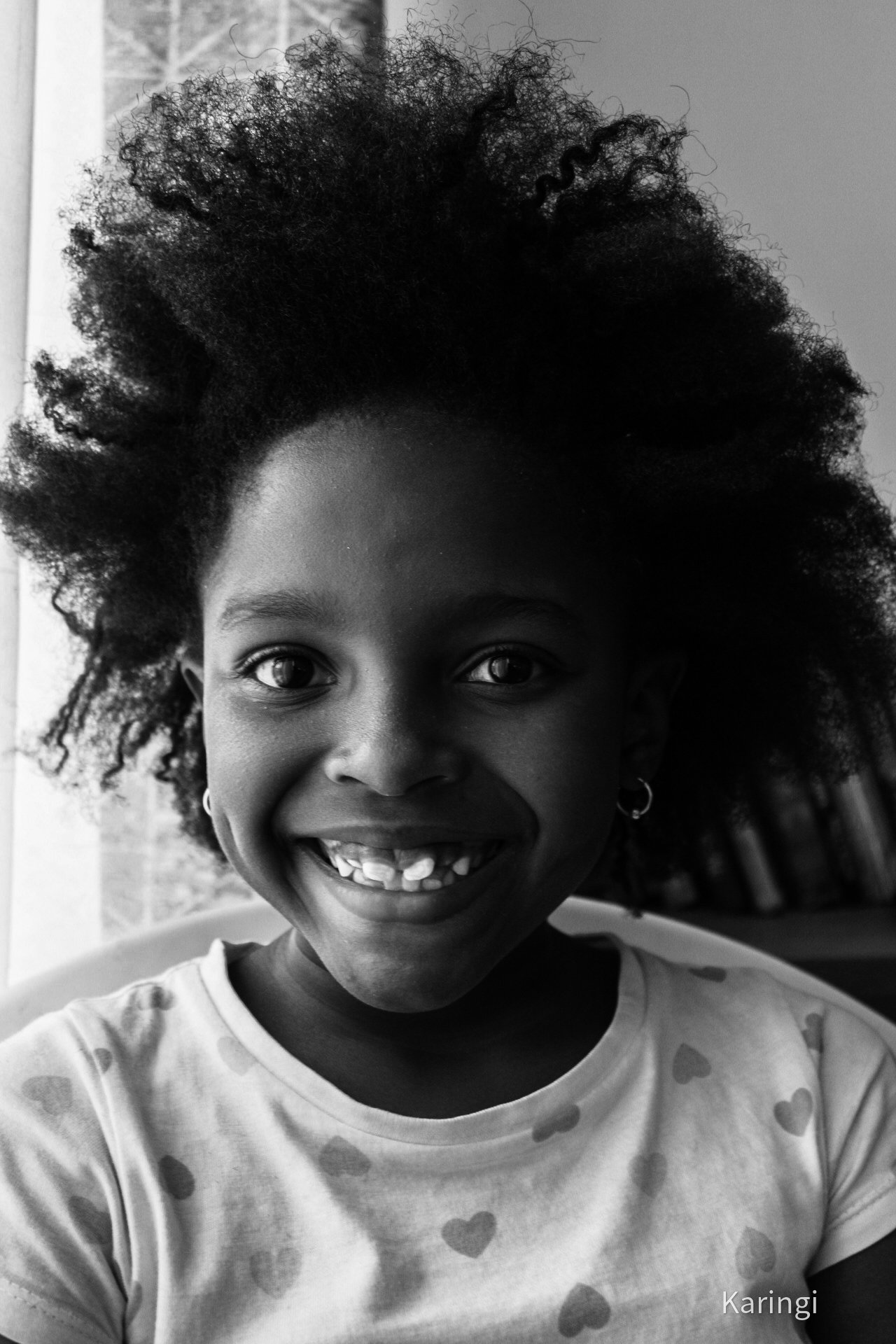
African Hair
Photo Story:
I didn’t plan the photo. It
happened the way most honest art does, quietly.
My sister was sitting by the window, sunlight spilling into the room like warm honey. She had just taken down her braids, and her hair stood free in its full, unapologetic glory. Thick. Coiled. Soft but powerful. It framed her face like a crown that had always belonged there.
For a second, she looked almost unsure of it.
Growing up, I watched how African hair was treated like a debate instead of a blessing. Too big. Too rough. Not “professional.” Not “neat.” I heard those words too many times. In school. In salons. Even casually in conversations that pretended to be harmless.
But that day, in that light, there was nothing to fix.
Her hair caught the sun and reflected it in tiny spirals. Every coil looked intentional, like it had been designed by someone who loved detail. I remember thinking: This is architecture. This is heritage. This is history that survived oceans, colonization, classrooms, and beauty standards.
So I picked up my camera.
She didn’t pose. She didn’t smile dramatically. She just existed. And that’s what made it powerful. The photo wasn’t about perfection. It was about presence. About seeing African hair not as something to tame, but something to honor.
When I clicked the shutter, I wasn’t just taking a picture of my sister.
I was capturing resistance. I was capturing softness. I was capturing pride.
What inspired me wasn’t just the aesthetic. It was the story woven into every strand, generations of women who wore their hair as identity, as rebellion, as art. My sister became a living reminder that beauty doesn’t need permission.
That photo taught me something too.
Sometimes the most powerful images aren’t staged. They’re moments where culture, light, and love meet, and you’re brave enough to notice.
How long has Ryan Karingi loved photography:
I started photography in 2020, when the world felt like it had paused.
Covid had locked everything down. Streets were quiet. Schools were closed. Days felt long and uncertain. I picked up a camera out of boredom at first, just something to do while the world waited. I photographed empty roads, my family at home, sunlight through the window, little details I had never noticed before.
When everything slowed down, I started seeing more.
What began as passing time slowly became purpose. In 2021, I wasn’t just taking pictures, I was learning. Watching YouTube tutorials. Practicing angles. Studying light. Failing. Trying again. My subjects were whoever was around: siblings, friends, random objects. I didn’t have much equipment, but I had curiosity.
By 2022 and 2023, photography wasn’t just a hobby. It was part of how I saw the world. I started understanding composition, emotion, storytelling. I realized a photo isn’t just about what’s in front of you, it’s about what you choose to highlight.
In 2024 and 2025, I grew more confident. I began thinking bigger events, portraits, maybe even getting paid for it. My camera stopped feeling like a toy and started feeling like a tool. A way to document, to express, to build something for myself.
Now it’s 2026.
Six years later, what started in isolation became identity. Photography grew with me. From a bored kid in lockdown to someone who understands that every frame holds meaning.
I didn’t just learn how to take pictures
How they discovered their passion for photography:
People say I started photography in 2020.
But honestly, I think it started long before that.
When I was about two years old, I used to grab phones and randomly take pictures. Most adults thought it was just a child tapping the screen. But when they checked the gallery, the photos weren’t random. Faces were centered. Moments were caught mid-laugh. Somehow, even as a toddler, I framed things well. No one taught me composition, I just saw it.
As I grew up, that instinct never really left. I’d be the one taking photos at family gatherings. I’d adjust angles without knowing the technical terms. I didn’t know what “lighting” or “framing” meant yet, I just knew when something looked right.
Then 2020 happened.
Covid slowed the world down. And in that stillness, I had time to notice myself. I picked up a camera more intentionally. What used to be random became deliberate. I started studying light, shadows, expressions. I began to understand why my pictures had always felt different.
That’s when it clicked.
Photography wasn’t just something I did.
It was something I’d always had in me.
2020 wasn’t the beginning, it was the realization. The moment I stopped seeing it as coincidence and started seeing it as calling. From a two year old holding a phone too big for his hands to someone now shaping stories through a lens, it’s been there all along.
I didn’t find photography.
Photography found me first.
How to Vote:
i. Scroll up, fill the number of votes you want to buy for your contestant in the box that looks like this:
You can put any number in the box. There are no limits.
ii. After typing the number of votes you want to buy, click on the blue button to make payment.
NOTE: Votes are effected automatically and immediately. But if a vote is not effected immediately, then wait for 20 minutes, and it will be effected. And if you face any issues, feel free to contact info@masteratphotos.ke for help and support.